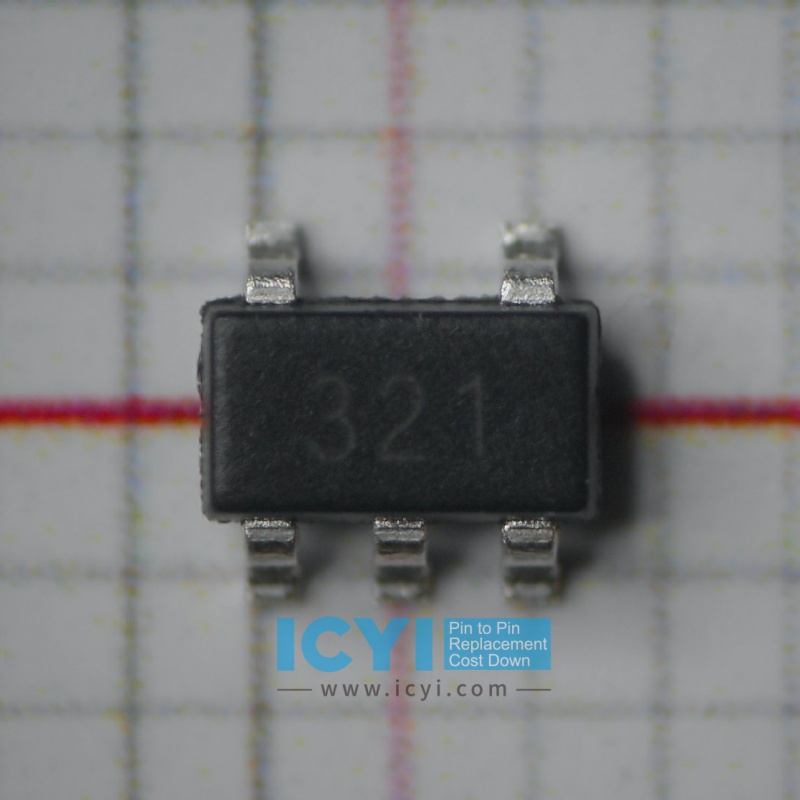

SGM321YN5/TR is a Replacement parts of
LMV321IDBVRG4
Mfr.Part No. :
SGM321YN5/TRManufacturer :
SGMICRODescription :
1MHz, 60µA, Rail-to-Rail I/O CMOS Operational AmplifiersPackaging :
ReelPackage :
SOT-23-5Stock :
in stockPrice :
$0.1-$0.15
SGM321YN5/TR
| Price: | $0.1-$0.15 | $0.2-$0.3 |
|
Replace parts:
Replacement parts:
Alternative parts:
Pin to pin parts:
|
SGM321YN5/TR |
LMV321IDBVRG4
|
Product Overview and Positioning
SGMICRO SGM321YN5/TR is a low-power, rail-to-rail input/output CMOS operational amplifier targeting low-voltage, battery-powered, and general-purpose analog signal conditioning applications. It features extremely low quiescent current and wide supply range, optimized for modern low-power systems.
Texas Instruments LMV321IDBVRG4 is Texas Instruments’ single-channel, low-voltage rail-to-rail output operational amplifier designed for general-purpose low-voltage applications. It has historically been positioned as a cost-effective solution in automotive, industrial, and consumer circuits requiring basic op-amp functions with rail-to-rail performance.
Supply Voltage and Rail-to-Rail Capability
SGM321 supports a wider supply voltage range from 2.1 V to 5.5 V with true rail-to-rail input and output, maximizing dynamic range at both low and moderate supply voltages, and enabling more flexible interfacing with modern digital systems and single-cell battery supplies.
In contrast, LMV321IDBVRG4 is specified for 2.7 V to 5.5 V operation with rail-to-rail output only, and it does not guarantee full rail-to-rail input swing as broadly as SGM321 across the entire supply range, which can limit its input range in low-voltage sensor interfaces.
Advantage: SGM321YN5/TR — broader supply range and full rail-to-rail input/output improves flexibility in low-voltage designs.
Quiescent Current and Power Consumption
One of the standout features of SGM321YN5/TR is its exceptionally low quiescent current of ~60 µA per amplifier (typical), making it well suited for battery-powered, energy-sensitive designs and always-on monitoring circuits.
By comparison, the LMV321IDBVRG4 typically consumes around 130 µA supply current, which is more than double that of SGM321, leading to higher power draw in continuous operation.
Advantage: SGM321YN5/TR — significantly lower power consumption for ultra-low-power and portable applications.
Input Bias and Offset Performance
SGM321YN5/TR exhibits ultra-low input bias current (~10 pA typ.) and a low offset voltage (5 mV maximum), enabling higher precision in sensor interfaces such as photodiodes, strain gauges, or piezoelectric sensing.
Although data for LMV321IDBVRG4 may vary by revision, typical input bias current and offset voltage for LMV321 series devices are generally higher (e.g., input bias currents in the nA range and offset voltages of a few mV).
Advantage: SGM321YN5/TR — better DC precision for high-accuracy and low-leakage signal conditioning.
Gain-Bandwidth and Frequency Characteristics
Both amplifiers target similar general-purpose bandwidth needs with 1 MHz gain-bandwidth product, providing adequate performance for filters, active integrators, and analog buffering in typical mixed-signal systems.
However, SGM321’s ultra-low bias and combined rail-to-rail I/O generally enable more consistent AC performance across varying load conditions in low-voltage systems.
Advantage: Tie in basic bandwidth, with SGM321’s broader input swing offering practical benefits at system level.
Operating Temperature Range and Industrial Robustness
SGM321YN5/TR is specified over the industrial temperature range (-40 °C to +85 °C) and packaged in compact, green SOT-23-5 or SC-70-5 formats, supporting small form-factor designs.
LMV321IDBVRG4 devices also support extended temperature operation, but specific variants may differ (for example, some LMV321 products are specified to +125 °C on TI’s site when broader industry temperature range is needed). Thus, LMV321 may offer broader thermal margin depending on revision and grade.
Advantage: Comparable — both can suit industrial environments, though qualification choices depend on specific use cases.
Application Suitability
SGM321YN5/TR excels in battery-powered, precision sensor interface, and ultra-low-power systems (e.g., portable instrumentation, IoT nodes), due to its low current, wide supply, rail-to-rail I/O, and low bias/offset characteristics.
While LMV321IDBVRG4 remains a solid general-purpose amplifier for legacy and cost-driven applications, its higher supply current and narrower supply range make it less ideal for modern low-power, low-voltage, or sensor-centric designs.
Advantage: SGM321YN5/TR — better fit for emerging low-power and precision analog front-ends.
Summary of Key Competitive Advantages
In summary, when comparing SGMICRO SGM321YN5/TR against TI’s LMV321IDBVRG4 at a system-level design perspective:
Lower power consumption (~60 µA vs ~130 µA) — critical for battery-powered systems.
Full rail-to-rail input and output over a wider supply range — enhances input dynamic range.
Ultra-low input bias and competitive offset — improves precision in sensor interfaces.
Optimized for low-voltage environments (2.1 V operation).

Hot Tags :
 Subscribe And Save Stay in touch.